From Prototype Experiments to a Global Wind Revolution
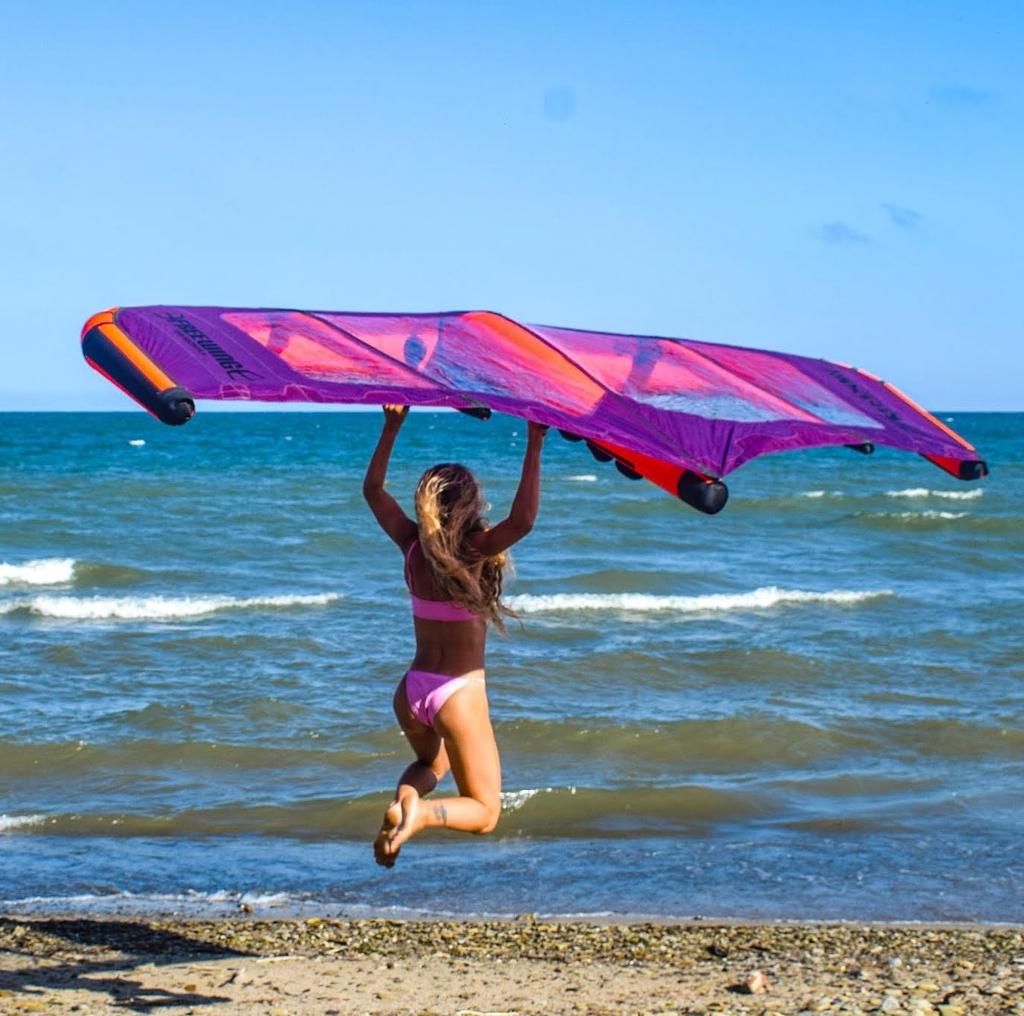
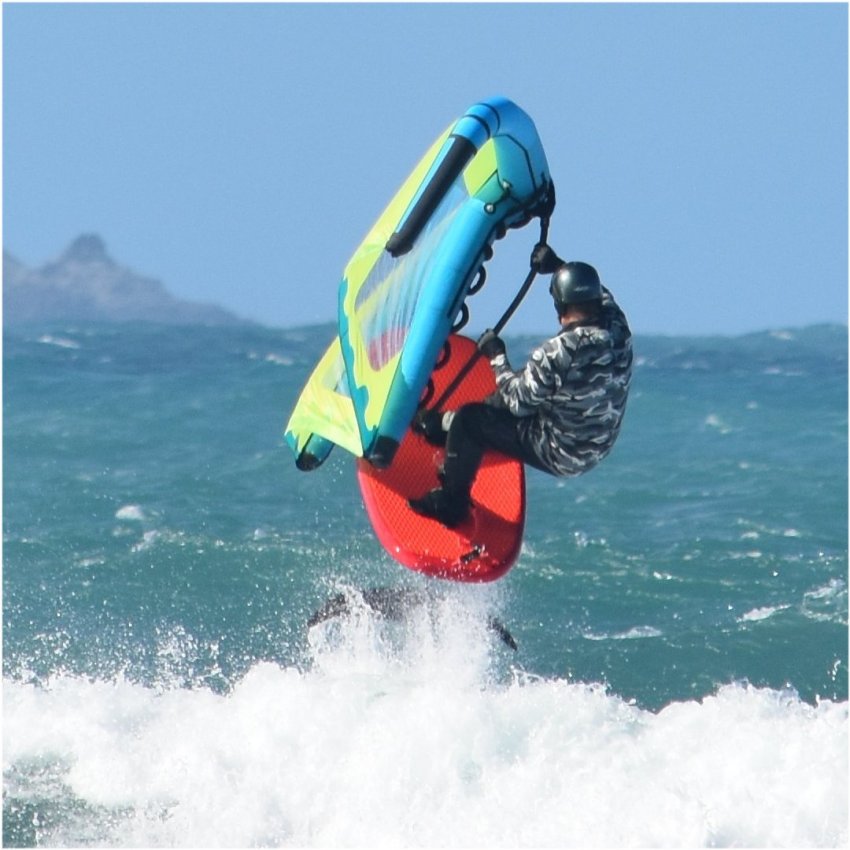
When the first handheld wings appeared over the waters of Maui and Hood River, few imagined they would spark one of the fastest-growing wind sports in the world. What began as a niche experiment—a sail with no mast, a board with no fin—has now become the most dynamic hybrid of surfing, sailing, and flight: wing surfing.
Today, Maui stands at the center of that story. With its steady trade winds, warm water, and deep roots in windsurfing and kiteboarding, the island became both the crucible and launchpad for this revolutionary sport.
Early Dreams of a Free Sail
The idea of riding the wind with a handheld sail dates back decades. Jim Drake, the co-inventor of windsurfing, envisioned a “wing sail” that would free the rider from the mast and boom entirely. But the technology of the time—heavy materials, rigid frames, and inefficient designs—made it impractical.
For years, the dream sat dormant, waiting for lighter materials, inflatable bladders, and advanced aerodynamic understanding to catch up.
Maui and Hood River: The Twin Laboratories
In the 2000s and early 2010s, two places—Maui, Hawaii, and Hood River, Oregon—became the twin laboratories for a new generation of hybrid wind sports. Both regions already nurtured strong communities of windsurfers, kiteboarders, and foil riders. Both had easy access to steady winds, deep technical expertise, and a culture of experimentation.
This was the perfect storm for innovation.
On Maui, long-time waterman, sailmaker, and instructor David Dorn was already blending decades of experience in sail design, kiteboarding, and hydrofoils. With an international design team spanning Japan and Germany, Dorn’s group began experimenting with early prototypes of what would become the Dragonfly FreeWing.
These first designs were lightweight, durable, and efficient—made possible by the same inflatable technologies pioneered in kiteboarding. The Dragonfly team iterated quickly, producing working prototypes and fine-tuning them in Maui’s relentless summer-like conditions, where the trades blow almost every day of the year.
The Dragonfly FreeWing: First to Market
While many major brands were still in their experimental phases, Dragonfly FreeWing reached production status before Duotone’s model, designed by Ken Winner.
Winner’s designs were excellent and influential, but the Dragonfly team’s agile global collaboration and faster development cycle allowed them to release the first commercially available production wing ahead of the larger players. Dorn’s smaller, more flexible operation could test, tweak, and manufacture at a pace that the big industry names couldn’t match at the time.
This milestone positioned Dragonfly as a true pioneer of the modern wing surf movement—an independent innovator that proved the concept viable for mainstream riders.
Once Dragonfly’s production wings hit the water, other manufacturers quickly followed. Larger companies like Naish, Slingshot, Duotone, and nearly every kite brand soon entered the market, each offering their own iteration. Within a few years, the sport had gone from obscure prototype to global phenomenon.
The Foil Revolution: Less Drag, More Flight
The key to wingsurfing’s explosive success wasn’t the wing alone—it was the hydrofoil. When riders discovered that pairing the wing with a foil board drastically reduced drag, the sport suddenly became smoother, faster, and more accessible.
Foils transformed the experience. Riders could now fly silently above the surface, carving across glassy water with almost no resistance. The power-to-drag ratio was so efficient that smaller wings could deliver greater performance. This synergy created a new sensation: free-flight over water.
A Sport for Everyone: From Windsurfers to Newcomers
The beauty of wing surfing lies in its accessibility.
For experienced windsurfers and kiteboarders, the crossover was natural—many could ride confidently within their first few sessions. For newcomers, wingsurfing offered a gentler learning curve than either of its parent sports.
At first, some dismissed the sport as a novelty. But as soon as the first riders began foiling effortlessly across Maui’s lagoons and reef breaks, the tide turned. Wing surfing quickly proved itself not just as an experiment, but as a new way of flying on water.
The Cross-Sport Convergence
As wingsurfing grew, it began to reshape the landscape of wind sports.
Many long-time kiteboarders and windsurfers made the full switch to winging, drawn by the freedom, simplicity, and low-impact design. Others found a new balance—choosing to kite on stronger wind days and wing on lighter ones, blending the best of both worlds.
This crossover culture became part of Maui’s DNA. On any given day at Kanaha, you can see it all: classic windsurfers in the waves, kite foilers downwind, and wing riders soaring silently in between. The island remains one of the few places on Earth where all generations of wind sports coexist and evolve together.
Why Maui Was—and Still Is—the Perfect Testbed
Maui’s unique environment accelerated the sport’s development:
Consistent trade winds: ideal for testing prototypes day after day.
Warm water year-round: allowing riders to train and refine gear in comfort.
Diverse conditions: from flatwater lagoons to reef breaks and open ocean swells.
Tight-knit community: riders, schools, and designers share instant feedback.
Innovation culture: Maui has birthed multiple revolutions—windsurfing, tow-surfing, kiteboarding, and now wingsurfing.
The island’s combination of natural forces and creative talent continues to make it the epicenter of innovation for water sports worldwide.
From Niche to Mainstream: The Modern Era
Today, nearly every major kite or windsurf manufacturer produces wings.
Racing circuits, freestyle competitions, and wave events have sprung up globally.
Hydrofoil technology continues to evolve rapidly, with lighter, stronger, and more efficient designs appearing every season. And Maui remains at the forefront, both as a training ground and as a proving ground for new designs.
What started as a small circle of passionate innovators has become a worldwide movement—one that combines human skill, aerodynamic ingenuity, and the timeless call of the wind.
The Legacy of Innovation
Wing surfing’s story is a testament to independent innovation.
Before it had a name, before major brands saw the potential, there were small, agile teams like David Dorn’s Dragonfly FreeWing project, pushing boundaries in Maui’s relentless wind.
Those early prototypes proved that the idea was not only possible but practical—and they opened the door for the sport’s rapid evolution.
As with every major leap in ocean sports, it began with curiosity, collaboration, and the drive to fly.